Showing posts with label Upcoming 80 cars for India in 2011. Show all posts

Monday, March 21, 2011

The reloaded scooters in 2011

     I posted this topic mostly for my friend Ajitha. She wants to buy a new scooter and she asked me about that. So I suggested some of these scooters, but she didn't know about these. So I posted here, some of that photo and reviews. Well I hope, after reading this she will take a correct decision.

     Scooters are two-wheeled vehicles that are unique in the fact that the engine is usually under the seat and directly attached to the rear axle. This allows the rider to not have to straddle the engine but puts a limitation on rear suspension quality. Scooters, in contrast to many other classes of motorcycles, have bodywork to conceal all the mechanicals. These make for great runabouts in the city and are amazingly prevalent in Europe and Asia.  In 2011 the most scooter manufactures are trying to retouch their trump-cards. Here we are looking about the Honda Activa, Mahindra Duro and Tvs Wego.

TVS WEGO
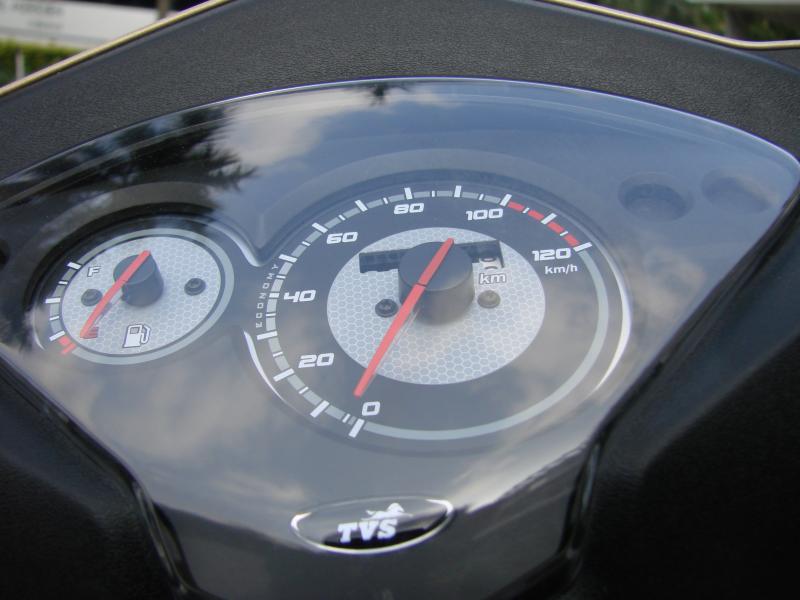
TVS Motors has always been wanting some action in the burgeoning Indian automatic scooter market. So, the Hosur based manufacturer has gone ahead to finally launch the TVS Wego. Though we’ve been used to pretty ordinary styling from TVS Motors in the recent past, the scooter manages to look pretty contemporary. Powered by a four stroke, 110cc engine pushing out 8bhp @7500 rpm, the TVS Wego is squarely aiming to topple the current market leader, Honda Activa. More importantly, the maximum torque output is 8NM@5500 rpm and it is the torque figure which will be of more relevance to the average Ram, Shyam or Ghanshyam. The 8Nm should be able to propel the Wego to respectable performance numbers as it weighs in at a light 105 kilos. The telescopic front forks suspending the 12 inch wheels promise a decent ride across the Indian moonscape. The rear suspension uses the industry standard, unitary spring loaded design. That said, the Wego does look solidly engineered just as most of TVS’s other products. And, does the Wego have enough ammo to topple the mighty Honda Activa? That, only time will tell. Meanwhile, the blokes at Vicky.in have already managed to take a spin on the TVS Wego. You might want to check that out as well. 

MAHINDRA DURO
The Duro designed to fulfill the transportation needs of the entire family without compromising on features.  The Duro gets you and your family to your destination in safety and comfort.  It has the longest wheel base among scooters for greater stability on rough roads, and it’s ergonomically designed with a wider seat and more legroom. It features extra-large brakes and a chrome-plated exhaust fender to protect your legs.  And it has a handy grab rail for your co-passenger. The Duro is tough and high-performance. Its robust 125cc engine is paired with a long-lasting battery to give you instant startup and a powerful drive. But no matter how fast you cover ground, the Duro’s extra-large fuel tank and excellent fuel efficiency mean you won’t be visiting the fuel pump too often. With a vibrant choice of colors, sleek and sporty styling, and trendy displays, the Duro delivers high value-for-money family transport.  Take a look at the 2010 NDTV Profit Car & Bike Scooter of the Year.

HONDA ACTIVA
Honda Motorcycle and Scooter India (HMSI) has introduced two new colour shades for the Activa Scooter.  The Activa can now be bought in six different colors with the introduction of the Orchid Blue and Armour gold (Grey, red, black and white are the other shades). Silver and purple colors have been discontinued.  The launch of the two colors took place at the 2010 Relio Quick auto Mall in Bangalore, a few days ago.

Pictures....

Honda Activa


Tvs Wego


Mahindra Duro


Wednesday, February 9, 2011

Ford Mustang DUB Edition (2011)

Ford Motor Company is teaming up with automotive lifestyle magazine DUB to roll out a specially customized version of the new 2011 Mustang, introducing the iconic sports car to a new generation of enthusiasts.
The Ford Mustang DUB Edition is based on Ford's outstanding new 3.7-liter V6 Mustang and will be available in the fall of 2010. A collaboration between Ford, DUB and Roush Industries, the Ford Mustang DUB Edition will be offered as a coupe, convertible or with the best-of-both-worlds Glass Roof option. Both six-speed manual and automatic transmissions are available.
"The Ford Mustang is the most customized vehicle in the world, and this collaboration pushes the boundaries even further," said Fritz Wilke, Mustang brand manager. "We're proud of our relationship with DUB and Roush and how they worked together to bring a new look to Mustang, helping the 2011 Ford Mustang DUB Edition appeal to a whole new audience."


Available only with Ford's new high-tech, 305-horsepower DOHC 3.7-liter V6, the Ford Mustang DUB Edition will offer:
  • 20-inch TIS wheels with Pirelli performance tires
  • Roush front fascia and splitter
  • Roush quarter window louvers and windshield banner
  • Roush lowering springs
  • Coupe, convertible or Glass Roof body style
  • Six-speed manual or automatic transmission
  • 3.31 rear axle ratio for spirited acceleration
  • DUB logo embroidered in front headrest and DUB stripe package
  • Black interior
  • Choice of four exterior colors: Black, Grabber Blue, Race Red or Ingot Silver
"Working with Ford and Roush is an honor and has been a dream come true for DUB," said Myles Kovacs, president and co-founder of DUB magazine. "The Mustang is such an iconic muscle car and has always been a customizer's favorite. The Ford Mustang DUB Edition stays true to its roots, but I think we've successfully brought a ton of hustle to the muscle."

Maruti Suzuki XL7 2011

American Suzuki Motor Corporation (ASMC) today debuted the all-new 2007 Suzuki XL7 midsize crossover SUV at the 2006 New York International Auto Show (NYIAS). With the introduction of the new front-wheel-drive/all-wheel-drive crossover SUV, Suzuki is moving forward to the next chapter in its ongoing SUV success story.

The 2007 XL7 is bigger, bolder and more powerful than the previous generation XL-7 and retains Suzuki's strong styling cues, while offering available all-wheel drive and available seven-passenger seating. In creating the all-new XL7, Suzuki leveraged its SUV heritage and expertise to design an all-new vehicle for the midsize SUV crossover segment that provides style, room and adaptability for active, mobile lifestyles.
"The all-new XL7 was designed to blend SUV versatility and safety with increased driver and passenger comfort," said Koji Yamada, chief engineer, XL7. "The XL7 not only offers the cargo and seating flexibility for all aspects of a consumer's active lifestyle, but performance capabilities and safety features that give them the confidence of being in control." 


Performance and Powertrain
The all-new 2007 Suzuki XL7 evolves from a rear-wheel-drive, truck chassis SUV into a crossover SUV based on the sophisticated GM Theta platform with full-length underbody rails for added strength. The XL7 is now a front-wheel-drive vehicle that features four-wheel independent suspension and available all-wheel drive. The standard powertrain for the Suzuki XL7 is a GM-designed, Suzuki-built 3.6-liter, V6 DOHC engine rated at an estimated 250 hp with 243 lb-ft of torque.
The XL7's 3.6-liter, High Feature (HF) engine with variable valve timing will be built under license by Suzuki in Japan using Suzuki engine-building technology at the Sagara engine plant.
The XL7 engine was developed as a joint effort between Suzuki and GM engineering and features unique Engine Control Unit (ECU) calibration. The use of the existing platform architecture accelerated the completion of the vehicle, which has been in development for three years.
The 3.6-liter, six-cylinder, DOHC engine is matched to a five-speed automatic transmission that features a manual-shifting (manumatic) mode. Although the new engine is nearly one liter larger than the 2.7-liter engine used in the previous XL-7, the new, larger XL7 was designed to deliver fuel economy equal to or better than its predecessor. EPA fuel economy estimates are 18 mpg/city and 24 mpg/highway for front-wheel-drive variants and 17 mpg/city and 23 mpg/highway for all-wheel drive. Towing capacity is rated at 3,500 pounds.


Advanced Chassis Design
The sophisticated chassis delivers nimble, car-like ride and comfort whether driving on the highway, city streets or rural roads. The XL7's responsive road manners communicate a sense of confidence and control in virtually every driving scenario, while still providing refined Noise, Vibration and Harshness (NVH) performance at or near the top of the midsize SUV category.
The XL7 features four-wheel independent suspension with MacPherson struts in the front and a multilink design in the rear. The independent rear suspension is fitted with hydraulic shock absorbers in the five-passenger configuration and Nivomat self-leveling rear shock absorbers when configured for the available seven-passenger design.
The small details add up to provide a car-like ride. The MacPherson strut-type front suspension is designed with long wheel travel, and the design of the struts compensates for coil spring side loads. The bottom of the coil spring is anchored more outboard in the spring perch to relieve the bending load on the strut caused when it was located further outboard to improve stability.
The multilink rear suspension design features a trailing arm plus three additional locating links to allow a low, wide load floor and maximum rear passenger space. The rear-trailing arm is a vertical design that provides flexibility in the twisting direction so the wheel can maintain camber as it moves vertically. The three locating links are designed to manage lateral loads and control the dynamic toe-in of the rear wheel.
The 3.6-liter, V6 DOHC engine is mounted in a double-isolated engine cradle system; the engine mounts to the cradle at four points and the cradle mounts to the rails at four points, providing double isolation from the body. The cradle system features two side load-bearing mounts and front and rear torque reaction mounts. There also is a friction snubber mounted on the passenger side of the engine to help control engine movement sometimes experienced during shifting.
 

All-Wheel Drive
The available all-wheel-drive system uses an active, electronically controlled rear differential module. The system responds immediately to all-wheel-drive requests and effectively eliminates lag times. A four-mount cradle secures the rear drive module, which is regulated by its own dedicated electronic controller. A new-design propeller shaft fitted with upgraded universal joints handles the added torque.
Hydraulic-Assist Rack-and-Pinion Steering
The fixed-rate rack-and-pinion steering is tuned for responsiveness and good on-center feel. Turning diameter is relatively tight, needing only 41.8 feet for a curb-to-curb turn and the steering wheel requires 2.7 turns for lock-to-lock operation. In addition, the steering column can be adjusted up and down (four degrees) to provide added driver comfort.
Stainless Steel Dual Exhaust System
The all-new XL7 is fitted with a true dual exhaust system, constructed of durable, long-lasting stainless steel. The system was designed for quiet, refined exhaust tones to achieve "best in class" NVH in terms of quietness and tonal quality. The exhaust system features two downpipes, two catalytic converters, a center muffler, two side mufflers and two 3.5-inch diameter exhaust tips.
Sleek Sophistication and Functionality
Evolved from the Suzuki Concept-X, which debuted at the 2005 North American International Auto Show in Detroit, the all-new XL7 features a modern, sleek and expressive design with Suzuki styling cues, such as triangle-shaped turn lamps, bold three-bar grille with large Suzuki "S," muscular wheel arches, dual exhaust with chrome tips and integrated roof racks.
Plush Interior
The 2007 Suzuki XL7 offers the driver and passengers a spacious, functional interior that provides upscale sophistication and refinement. The unique third-row seat delivers seven-passenger capability and real comfort.
With its six-inch deep footwell, the stretched platform delivers comfortable third-row seating, offering nearly 40 inches of legroom and 38.8 inches of headroom. In addition, the 50/50 split folding third-row seat can be folded flat into the floor for additional cargo carrying room, and the fold-flat front-passenger seat allows room for longer items such as skis, surfboards or even a small kayak.
In addition to the practicality of ample storage consoles and areas and the convenience of four 12-volt power outlets, the interior of the 2007 Suzuki XL7 features upscale wood or satin nickel appliqués on the instrument panel and doors, chrome accents throughout and matte black, low-gloss surfaces. Leather seating surfaces and leather-wrapped steering wheel are also part of certain trim packages.
Safety Features
The XL7's safety features start with the body structure itself - a combination of computer-designed high-strength, dual-phase and galvanized steels. The body structure is computer-designed to manage loads - to effectively transfer energy absorbed during impacts around the interior compartment and occupants - in both front and rear crashes.
In addition, rollover sensing is standard on both five- and seven-passenger XL7 vehicles. The technology uses sensors to proactively predict vehicle "tip up" on a flat road surface and applies brake force to the outside front and rear wheels in order to reduce lateral force in the vehicle.
The unibody construction is a high-strength steel structure, incorporating full-length frame rails and a safety cage in the middle into a single, welded unit. It also is designed with front and rear crush zones engineered to collapse in a controlled manner to help absorb crash energy while protecting the integrity of the occupant safety cage.
The safety cage is reinforced with welded, tubular-section members that frame door openings and support the roof and steel members in the doors. The combination of single-piece door aperture and door beam reinforcements help resist side-impact intrusion.
The all-new 2007 Suzuki XL7 is fitted with driver and passenger front airbags and side-curtain airbags. The XL7 also features a four-wheel anti-lock brake system (ABS) with electronic brake-force distribution (EBD), Electronic Stability Program® (ESP) (including traction control). In addition, the standard tire-pressure monitoring system continuously monitors critical tire pressures.
ESP, which is standard equipment on all XL7 models, provides a technically sophisticated safety net for the driver. The system uses a yaw sensor, lateral accelerometer and steering angle sensor to monitor vehicle stability and driver inputs. Working with the standard ABS with EBD and traction control system (TCS), the system can apply individual brakes selectively to control oversteer and understeer as needed to help the driver maintain control on slippery surfaces or during emergency maneuvers. Being able to control any or all of the brakes allows the ESP system to provide maximum responsiveness, control and enhanced accident avoidance capabilities, although ESP is not a substitute for safe driving practices.
The TCS uses brake and engine torque intervention to enhance traction during launch and acceleration on all road surfaces. If the ABS system detects impending wheel slip, it signals the powertrain Engine Control Unit (ECU) to adjust engine torque output accordingly. TCS also senses when one or more wheels spin faster than the vehicle speed and applies the brakes at that wheel or wheels. Working together, the two systems limit wheel spin and help maintain control and forward progress quickly and efficiently.
Additional safety features include three-point seatbelts in all five- or seven-passenger seating positions, seatbelt pretensioners, seatbelt load limiters in front-seat retractors, child latching system that meets Federal Motor Vehicle Safety Standard 225 requirements, five-mph bumpers and low front bumpers for optimum safety in the event of a collision with an automobile.


Toyota Highlander

Toyota has significantly revised its popular Toyota Highlander and Highlander Hybrid crossover sport utility vehicles for 2011, giving them enhanced styling, additional standard amenities and new user technology.
The 2.7-liter four-cylinder engine, which was available only in the Toyota Highlander Base grade model for 2010, is now also offered in the SE, the most popular grade (2WD only). The Toyota Highlander Hybrid debuts a more powerful and advanced 3.5-liter V6 gasoline engine, along with a standard Tech Audio Package and unique exterior design elements.


The 2011 Highlander is available in Base, SE and Limited grades in both two-wheel (2WD) and full-time four-wheel-drive (4WD). A 270-horsepower 3.5-liter V6 is standard on the Limited grade and available for the others. All Toyota Highlander Hybrid models are equipped with four-wheel-drive with intelligence and available in Base and Limited grades.
The first-generation Toyota Highlander pioneered the midsize crossover utility vehicle segment, ushering in car-like performance, comfort and fuel efficiency yet with SUV-like roominess and versatility. The second-generation Highlander amplifies those attributes and is among the leaders in the segment in standard active and passive safety features.

New Styling Details for 2011
The Toyota Highlander gets a sophisticated design update for 2011 featuring a new front fascia, hood and fenders, with the profile freshened by black rockers with chrome accents (gas models only). The headlights and tail lamps are also redesigned, as are the 17-inch alloy wheels. The Limited Grade offers stylish 19-inch wheels and also features silver roof rails. The SE grade gains a power liftgate.


Expanded Amenities and Tech for 2011
The Highlander remains a popular family vehicle and caters to that market more effectively for 2011 with more standard amenities and user technologies. In particular, Base and SE grades feature more comfort and convenience features than previously offered. A standard 50/50 split third-row seat and manual rear climate control have been made standard for all 2011 models.
The new Tech Audio is standard for SE and Limited and optional for Base grade and features a USB port, integrated XM Satellite Radio (includes 90-day trial subscription) and Bluetooth®, helping ensure a wide array of "connected" capabilities for passengers. In the Base grade, this is part of a more comprehensive package that also includes a backup monitor with 3.5-inch multi-information display, an eight-way power drivers seat, tonneau cover, engine immobilizer, easy-clean fabric interior, flip-up liftgate window, fog lamps and black roof rails.
The Toyota Highlander Hybrid base grade offers a new Leather Package that includes leather-trimmed front seats with front seat heaters, leather-trimmed steering wheel and shift knob, power moonroof, HomeLink®, auto-dimming rearview mirror with compass, plus an engine immobilizer with security alarm. The optional navigation system is now available for the SE grade (previously only on Limited), while the Limited gains standard automatic climate control for the rear and offers a new perforated leather. The Toyota Highlander Hybrid Base grade gains standard easy-clean fabric seating, along with an eight-way power driver's seat, the Tech Audio, the third-row seat and manual rear climate control.

Performance and Efficiency
The Toyota Highlander offers three distinct types of performance: a 2.7-liter four-cylinder engine joined the lineup in 2009, offering an EPA-estimated 25 MPG rating in highway driving. The 2.7-liter engine produces 187 horsepower and 186 lb.-ft. of peak torque.
The engine is equipped with a variable intake manifold and dual variable valve timing with intelligence (VVT-i), which controls phasing on both the intake and exhaust camshafts to optimize torque and fuel efficiency. The four-cylinder engine is teamed exclusively with a standard six-speed electronically controlled automatic transmission.
The available 3.5-liter V6 (standard on Limited) produces 270 horsepower at 6,200 RPM and 248 lb.-ft. of torque at 4,700 RPM. The V6, also, is equipped with dual VVT-i and a variable intake manifold. A five-speed electronically controlled automatic transmission (ECT) offers selectable manual sequential shifting.
The Toyota Highlander Hybrid model's Hybrid Synergy Drive features a new, more powerful 3.5-liter V6 for 2011, replacing the previous 3.3-liter V6. The system pairs the gasoline V6 engine with a high-torque electric drive motor-generator for total system output of 280 net horsepower. A second rear-mounted motor provides automatic on-demand four-wheel drive traction. The 2011 Highlander Hybrid receives EPA estimated fuel economy ratings of 28 MPG city and 28 MPG highway.
The 4WD Toyota Highlander Hybrid uniquely generates rear-wheel power with a separate electric motor (MGR) that provides additional drive torque on demand. Thus, the Toyota Highlander Hybrid 4WD-i system does not require power-transfer gearing or a driveshaft from the front. The system electronically varies front and rear torque distribution depending on traction conditions.
Activating an EV mode switch located on the front center console allows the driver to operate strictly in electric-mode under certain conditions for a limited distance at low speeds, or in some stop-and-go driving conditions. A new ECON drive mode switch activates a throttle control program that reduces the throttle response during acceleration, enhancing fuel economy. The Hybrid System Indicator in the instrument gauge panel provides the driver with a guideline to help maximize fuel consumption.

Handling and Ride
The Highlander continues to build on its strength of delivering one of the most capable, smooth and quiet rides in the segment. Four-wheel independent suspension is via MacPherson struts in front and a dual-link strut rear suspension system. Base and SE Highlander models are equipped with standard 17-inch alloy wheels with 245/65 R17 tires; the Limited features standard 19-inch alloy wheels with 245/55 R19 tires. A direct tire pressure monitoring system is designed to alert the driver if pressure in a tire drops to critical levels. All Toyota Highlander models are equipped with four-wheel disc brakes. On conventional Highlander 4WD models, full-time four-wheel drive is available on all V6 grades.

Active Safety
Toyota Highlander comes standard with Toyota's Star Safety System™. This system integrates operation of enhanced Vehicle Stability Control (VSC), Traction Control (TRAC), Electric Power Steering (EPS) and the anti-lock brake system (ABS), Electronic Brake-force Distribution (EBD), Brake Assist (BA).
Enhanced VSC helps the driver maintain control by automatically adjusting engine output and braking force at each wheel under certain conditions while also providing steering assistance in the appropriate direction through Electric Power Steering (EPS). Gasoline Toyota Highlander models are also equipped with a straight-line steering feature. When varying traction causes ABS to apply different left/right braking force, the system can apply steering torque to help offset left/right pull.
The Toyota Highlander Hybrid employs the advanced Vehicle Dynamics Integrated Management (VDIM) system. VDIM is designed to enhance handling, traction and braking systems that normally react to vehicle driving conditions by anticipating tire slippage before a skid, slide or wheel spin occurs and helps to make corrections in a smooth, progressive way. In addition to integrating all of the Highlander's dynamic control systems (VSC, TRAC, BA, EPS, EBD and ABS), the VDIM system also employs powerful proprietary software to integrate the Electronic Throttle Control with intelligence (ETC-i) and Electronically Controlled Brakes (ECB).
All Toyota Highlander models incorporate a corner-braking feature. Harnessing the integration of the vehicle's dynamic control systems, this feature limits brake pressure on inside wheels during cornering to help enhance control through the turn. Standard on all models, Hill-Start Assist Control helps prevent the vehicle from rolling backward from a stop by applying braking pressure for approximately two seconds.
Downhill Assist Control (DAC) is standard equipment on all gas 4WD models. The DAC feature is designed to maintain a constant speed and maintain handling and steering control by reducing wheel lock under braking even at slow speeds on slippery descents.

Occupant Safety
Toyota Highlander comes standard with seven airbags. These include advanced driver and front passenger airbags, front seat-mounted side airbags and a driver's knee airbag. Roll-sensing side curtain airbags help to protect the occupants of all three rows in the event of certain side collisions or vehicle rollovers. Additionally, all Highlander models are standard equipped with front active headrests.

Comfort and Convenience
Standard features on all Toyota Highlander models include front and rear air conditioning; eight-way adjustable driver's seat (10-way on Limited); power door locks and windows with driver's window jam protection and auto-up/down feature; manual tilt and telescopic steering wheel; cruise control; multi-function keyless entry system; UV-reduction windshield and rear privacy glass; digital clock; dual sun visors with vanity mirrors and sliding extensions; conversation mirror; illuminated entry system; scheduled maintenance indicator light; full-size spare tire and more.
The Highlander SE and Limited grades feature a standard backup camera with a 3.5-inch multi-information display; this feature is available for Base grade models for 2011 as part of the optional Tech Package. The display includes a backup camera monitor, clock, outside temperature, warning messages, and cruise information that includes average fuel economy, average speed, distance to empty, current fuel economy, and trip timer. On models equipped with the optional navigation system, the backup camera's images are viewed on the seven-inch navigation screen.

Options
A variety of available options and accessories include a voice-activated touch screen navigation system with an eight-inch screen; JBL premium audio; leather seat trim with heated front seats, and a power tilt/slide moonroof. The optional tow package for V6 models enables up to 5,000-pound maximum towing capacity. The four-cylinder tow package enables up to 3,500 pounds of maximum towing capacity. A power liftgate that can be opened and closed with a key fob is an available option on the Base grade and standard on SE and Limited.

Exterior Design
Designed at Calty Design Research in Newport Beach, Calif., the second-generation Toyota Highlander moves away from traditional SUV styling cues. Clean, sculpted lines, a wide, stable stance and muscular contours give Highlander a contemporary, dynamic presence. The Base grade Toyota Highlander could be mistaken for an upgrade model with its six-spoke 17-inch machined alloy wheels, color-keyed power remote outside mirrors, and silver-painted front grille. The Limited looks the luxury part with chrome door handles and roof rails, puddle lamps and rear spoiler.

Interior Design
The Toyota Highlander provides an open, airy and versatile interior with seating for seven or up to 95.4 cubic feet of total cargo capacity (94.1 for Highlander Hybrid). There are numerous storage compartments throughout the cabin, along with 10 cup holders, four bottle holders, two front and one cargo-area 12-volt auxiliary power outlets and cargo area tie down hooks.
The Base and SE grades feature a center console, shift knob with silver-painted accents and front driver and passenger assist grips. The center console, shift knob and assist grip on the Limited grade feature wood grain-style trim. Styling features on the inside of the Toyota Highlander Hybrid include a silver and wood grain-style interior trim with chrome door handle accents, Optitron meters with blue graphics and a power meter with a hybrid system indicator.
The headrests are adjustable in two ways on the Base grade and four different ways on SE and Limited. The second row provides 40/20/40 split seatbacks. The seat functions as either a three-person bench or, by removing the Center Stow™ seat, a pair of captain's chairs complete with armrests, creating a convenient walk-through area between the seats for easier access to the third row. A Center Stow™ center console can also be placed between the seats to provide additional storage. The second row also slides fore and aft and reclines.
Access to the third-row is made easy by placing the walk-in lever at an easy to reach position at the bottom of the passenger-side second-row seat. Standard one-touch levers inside the cargo area allow the second-row seats to fold forward and flat. The third-row seats function in a similar manner, using a lever in the back of the seat.

Hyundai i30 Estate

The all-new Hyundai i30 Estate is based on a stretched platform extended by 50mm, and as a result is a more flexible, family-friendly package. And with prices starting at £12,995, the new Hyundai i30 beats the opposition for value and equipment.
Aimed at the family and leisure motorist who doesn't want the compromises of an MPV, the Hyundai i30 Estate boasts more rear leg and headroom than the hatch, along with a bigger boot and a lower loading edge.


But it's not just the Hyundai i30 Estate's practicality that makes everything else in the sector look a little underwhelming. Like the Hyundai i30 hatch, it's exceptionally well appointed and boasts a host of standard features that would normally feature on the option lists of rival cars. Air conditioning, ESP and an auxiliary USB/iPod connection are all standard across the range - as is Hyundai's unique Five-Year Unlimited Mileage Warranty.
The Hyundai i30 also features a number of design features that mark it apart from the hatch. The front end has additional chrome highlighting, while the standard roofbars are as attractive as they are useful. The estate also features door mirrors that incorporate the side repeater lights - a feature unique in the sector. For added security - and to avoid being sideswiped by the local pizza delivery moped - they also fold in electrically.
Customers can choose between three engine and transmission options. Both the 1.6-litre petrol and 1.6-litre CRDi diesel powerplants already feature in the hatchback range, while the 1.6 litre petrol is available with an optional automatic transmission.
With its bespoke platform, new design features and fully loaded specification list, you might expect the Hyundai i30 Estate to attract a correspondingly oversized premium over the hatch. Prices start at £12,995 for the 1.6-litre Comfort model - which represents a £700 increase over the equivalent i30 hatch. In addition all Hyundai i30 Estates feature electric folding doors mirrors with integrated repeater lights, roof rails, cargo security screen and a rear power outlet.


Hyundai i20 3-door

Building on the reputation for peerless reliability and exceptional cost-effectiveness established by its Getz predecessor the Hyundai i20 offers drivers more of everything. It has enhanced functionality from the intelligently configured cabin layout, higher levels of luxury, convenience and safety equipment and engaging handling from its all-new chassis. A line-up of new petrol and turbodiesel engines, plus the choice of manual or automatic transmissions further enhance the Hyundai i20's credentials and make it the most competitive package in the supermini sector.
Like the i30 and i10, the Hyundai i20 has been designed and developed in Europe to meet the high expectations of European drivers, and will prove capable of delighting them with new technology and low running costs. Initially available as a five-door model, the Hyundai i20 3-door version debuts in April 2009.


Design
Designed at Hyundai's European headquarters in Russelsheim, Germany, the new Hyundai i20 follows in the stylish footsteps of the acclaimed i10 and i30 models. Lower, longer and wider than the Getz it replaces, the five-door Hyundai i20 rides on an extended 2525mm wheelbase, enhancing both its ride comfort and spacious interior architecture. Featuring Hyundai's distinctive design motifs - a bold chrome-topped grille flanked by teardrop headlamps at the front and striking stacked rear light clusters - the Hyundai i20's modern lines are further strengthened by neat details. These include colour-co-ordinated bumpers, integrated door handles and chunky 15 or 16-inch wheels. The Hyundai i20 also introduces a new palette of bold colours - inside and out.
Comfort and versatility blend seamlessly in the new Hyundai i20's spacious and generously-appointed cabin. All three trim levels - Classic, Comfort and Style - feature air-conditioning, remote central locking, CD and MP3 audio system with integrated data display screen, Aux-in socket, switchable passenger airbag and electrically operated windows. The Hyundai i20's list of standard features puts it head and shoulders above rivals - some of which cost thousands more.

Suspension, ride and NVH
In keeping with its dynamic styling, the Hyundai i20 rides on an all-new platform that delivers an agile driving experience combined with remarkable refinement. Much of the car's ride and handling development work was undertaken on European roads - hot weather testing was carried out in Spain, cold weather trials took place in Sweden while high-speed testing was completed in Germany. As a result, Hyundai's ride and handling engineers were able to tune the Hyundai i20's front MacPherson strut and rear torsion beam suspension to deliver the taut and alert driving dynamics demanded by the European market. Passive safety was a top priority too, and the Hyundai i20 handles in a predictable manner. However, in extreme situations, the driver has the added back up of ESP - standard on all Hyundai i20s built after February.
The new rack and pinion steering setup has also been tuned to deliver quick and accurate responses resulting in excellent urban agility. Extensive use of advanced noise reduction materials throughout the development process - particularly in the diesel-powered models - has resulted in exceptionally high levels of refinement, giving the Hyundai i20 a cosseting cabin ambience.
Keeping the weight low was another priority for the engineers, and a series of clever measures has resulted in a car which is barely heavier than the smaller Getz it replaces. Despite being loaded with equipment and extra safety features, the 1.2-litre Hyundai i20 has a kerb weight of just 1,085kg - giving benefits in handling, economy and performance.

Powertrain
Hyundai's all-new i20 debuts with a range of new petrol and diesel engines that have been engineered to deliver greater performance, enhanced economy and lower emissions than ever before.
The petrol line-up comprises of the all-new 78PS 1.2-litre Kappa engine and a 100PS 1.4-litre unit previously seen in the i30. The latter is offered with the option of a four-speed automatic gearbox.
Posting a low CO2 rating of just 124g/km (that's around 15g less than similarly-sized petrol engines from most rivals) and returning 54.3 mpg on the combined cycle, the all-new 1.2 all-alloy engine delivers an excellent combination of performance and economy. This engine is expected to be the best seller in the UK. The 1.4-litre petrol unit delivers an equally impressive 133g/km and 50.4mpg combined (in Comfort versions) - figures that better some rivals' 1.0-litre engines!
Geared up to meet the rising demand for low-emission, high-economy diesel power, the Hyundai i20 will be launched with two all-new turbodiesel engines, both with a 1.4-litre capacity and offering 75PS or 90PS. Emissions and fuel economy figures are exceptional - at just 116g/km and 64.2 mpg for the 75bhp version and 118g/km and 62.8 mpg for the larger-wheeled 90bhp model. As a result, both Hyundai i20 diesels are in VED band 'B', which means a tax disc will cost just £35 a year.
In addition, company car drivers will find they are taxed for benefit-in-kind at just 13% - offering significant savings for those wanting to downsize.

Safety and convenience
As the i30 proved, Hyundai is serious about safety. The new i20 debuts with exceptionally high levels of active and passive safety equipment - in fact it is Hyundai's aim to make the Hyundai i20 the safest car in the supermini class.
Hyundai doesn't believe safety should be limited to the more expensive models in the range either - Active Head Restraints and a total of six airbags are standard on all i20s. In a first for the supermini class, Hyundai is also making ESP standard across the range on all i20s built after February 2009. Hyundai's bold move for road safety will mean the Hyundai i20 offers unrivalled levels of active and passive safety in the class.
Its outright agility, responsiveness and electronic aids play a key role in keeping the Hyundai i20 driver out of harm's way, but should the worst occur, those on board are protected by the extensive use of high-tensile steel in the robust chassis. Front, side and curtain airbags protect from front and side collisions while active headrests lessen the effects of whiplash if hit from the rear.
This safety package is further enhanced by ISOFIX mounting points in the rear and seatbelt reminders for all five occupants. Hyundai is confident of a top points score in Euro NCAP adult occupant protection and child protection crash test results, even under the new stricter rules for 2009.
The Hyundai i20's five-seater interior may pamper, but it also scores top marks for everyday practicalities. The 40:60 split rear bench folds flat, while the roomy and sensibly-shaped 295-litre boot is not bettered by any key rival. Fold the seats flat and a massive 1060 litres is on offer.
The Hyundai i20 also features numerous interior storage spaces including a massive, cooled passenger glovebox and two cupholders. These elements are complemented by the reach-and-rake adjustable steering wheel, complete with integrated audio controls on most models, plus keyless central locking actuated by i20's folding keyfob.


Tuesday, February 1, 2011

Nissan Sunny 2012

Nissan Motor Co., Ltd. unveiled an all-new sedan model at the 8th China (Guangzhou) International Automobile Exhibition. Using the famed 'Sunny' name in China, this new model will go on sale first in China in January 2011 and then progressively across 170 countries worldwide under different vehicle brand names.
The Nissan Sunny was first introduced in China in 2003 and was significant as the first locally built model from the new Dongfeng Nissan partnership. Acclaimed by consumers for its combination of quality, space and driving performance, the Nissan Sunny quickly help establish a foundation for the Nissan brand in the passenger vehicle market in China.


A projected class leader in fuel economy, the all-new Nissan Sunny is expected to appeal to young families in their 30s looking for a medium sized sedan that combines a dynamic upscale design with the space, quality and features associated with the Sunny and Nissan brand.
Combining the proven Nissan 1.5-liter HR15DE engine with dual injectors and a new-generation Xtronic CVT with an auxiliary transmission, both of which are newly introduced in China, Nissan Sunny delivers ease in handling for city driving where there's frequent acceleration and deceleration, and superior environmental performance as a projected class leader in fuel economy.


MacPherson struts are used for the front suspension and a torsion beam for the rear suspension, making for sporty and agile driving at low speeds, and steady and stable driving at higher speeds.
The new Nissan Sunny will be produced in Dongfeng Nissan's Huadu Plant in Guangzhou and will be priced from RMB 82.8K to 112.8K (1.04 million - 1.41million yen).

Maruti Suzuki Swift 2011

Suzuki Swift brings to the compact car segment a blend of eye-catching good looks, Japanese quality and European-inspired driving dynamics, and with prices starting at £9,190, excellent handling and 60 mpg-plus fuel economy from the 1.3 DDiS, it has the individuality to attract the most discerning of supermini customers.
The model line-up offers a choice of 1.3-litre petrol engine in three and five-door body styles, and a 1.3 SZ3 DDiS diesel engine in five-door guise. The 1.3-litre petrol model is available in SZ2, SZ3 and SZ4 grade; the 1.5-litre petrol is available as a five door with automatic transmission only.


 The distinctive styling and spacious interior are complemented by a comprehensive specification. All models feature front, side and curtain airbags, radio/CD player, remote central locking and immobiliser, electric front windows and mirrors, steering wheel-mounted audio controls and tinted glass, while SZ3 models and 1.3 SZ3 DDiS gain front fog lamps, electric heated door mirrors and manual air conditioning. SZ4 models gain keyless start, automatic air conditioning and 15" alloy wheels.


1.3-litre petrol engine
Suzuki Swift is engineered to excel in urban driving or on twisting country roads. Its petrol engine, a 92PS 1.3-litre has been selected for strong performance at low and mid-range engine speeds.
The engine delivers enjoyable driving characteristics, with the Suzuki Swift 1.3-litre dispatching 0-62mph in 11 seconds. Top speed is 109mph. This performance is matched by strong fuel economy with all models easily exceeding 40mpg in the combined cycle driving, including the 1.5 automatic, which returns 43.5mpg. Economy rises to 48.7mpg for the 1.3-litre.


Smooth, efficient and economical 1.3-litre diesel
The 1.3-litre common rail diesel engine with turbocharger and intercooler gives smooth progress even at low engine speeds. With the wide spread of torque peaking at 190Nm at just 1,750rpm it provides superb flexibility and kind-to-the-wallet running costs. Fuel economy adds to the strong value proposition, with an official 61.4mpg in combined cycle driving.
Transmissions
The same five-speed manual transmission is used in both petrol and diesel-powered models, with suitably revised gear ratios for the diesel. It gives satisfyingly firm and quick gear shifting thanks to an enhanced linkage arrangement. Unusually for the Suzuki Swift's segment, the four-speed automatic available a standard on the five door 1.5-litre SZ4 has a gated shift lever design.
Global outlook, European focus
Suzuki Swift was the first product of Suzuki's radical innovation programme to strengthen its position as both a leading compact car manufacturer and one of the world's foremost motorcycle brands. It introduced new ideas and design thinking that will define many more new Suzuki models in years to come.
Suzuki Swift is global in outlook and production - it is built in Japan, Hungary, China and India - but its development has been focused firmly on the demands and tastes of the European market in terms of design and driving characteristics. Indeed, the design team's first step was to establish a base in Europe, where it was able to gain a valuable insight into the European mindset and draw inspiration from the European environment. And much of the chassis development and refinement was based on real-world intelligence gained through extensive road and track testing across the continent.
The result is an innovative, sporty and elegant design with genuine international appeal. As a new departure in Suzuki design, Swift develops styling themes first seen in the Concept-S and Concept-S2 show cars, and demonstrates the company's desire to develop original interpretations of established market segments.
The stylists deliberately shunned the trend towards 'one-box' uniformity, instead producing a substantive design with a distinct bonnet. Muscular, flared wheel arches, bold sills, wheels pushed out to each corner, and a broad-shouldered beltline that continues all the way to the tail lights express the car's inherent stability and dynamic appeal.
The strong curvature of the nose together with the square cut openings of the wide, deep spoiler and mesh grille add further distinction. The black A and B-pillars create a wraparound glasshouse effect, and the headlamp housings sweep back into the wings to mirror the shape of the tail lights.
The distinctive shape of the tailgate combines with the large rear bumper to give the lower part of the body a solid appearance. At the top of the tailgate, the roof's trailing edge is shaped to form a spoiler, improving aerodynamics and saving a valuable 1kg over a conventional bolt-on item.
Easy entry
The SZ4 models feature keyless entry for simple door unlocking/locking and engine start-up. With this system, there is no fumbling to insert a key in the lock or press a remote, all you need to do is have the key in your pocket or bag and press the small black button on the door handle to unlock. Once inside the car, the ignition barrel can simply be twisted to start and stop the engine. When parked, press the door handle button once and the car will be locked and immobilised.
And to make life even easier, particularly when carrying shopping bags or luggage, the tailgate has an electric catch that is released with just a light touch.
Room to breathe
At 1,690mm, Swift has one of the widest bodies in its class. This, together with a long wheelbase, allows for a spacious cabin with plenty of space for everyone on board (up to four in the three-door models, five in the five-door) and a generously proportioned and practical boot.
The design team set out to create a chic yet functional interior which uses aluminium trim highlights to add an air of understated sophistication. Tight fit and finish of trim together with high-grade plastics contribute to an overall sense of refinement and quality.
The front seats offer superior support and hold and have class-leading fore and aft adjustment of 240mm. Driver's seat height adjustment and a tilt-adjustable steering column are standard features, enabling drivers of all different heights to find a comfortable driving position.
The instrument binnacle is set relatively low to ensure good forward visibility and reinforce the cabin's sense of openness. A triple gauge instrument cluster features a tachometer with a needle that rests in the six o'clock position, reflecting sports bike convention, and a digital information display showing time, fuel consumption and outside temperature is mounted centrally on the leading edge of the fascia.
The radio/CD player is seamlessly integrated into the dashboard and can be operated using either the one touch push buttons on the unit, or additional controls mounted on the sporty three-spoke steering wheel. Large, dial-type controls for the heating and ventilation system or, on SZ3, SZ4 and SZ3 DDiS models, the standard air conditioning (and automatic air conditioning on SZ4), are located beneath the audio system.
Storage spaces for mobile phones, CDs and other small items are handily located around the cabin, including a compartment in the instrument panel, glovebox, front and rear cup holders (three in total), a seatback pocket, front door pockets - large enough for A4-size road atlases - and a 'hidden' tray which slides out from under the front passenger seat.
The ashtray takes the form of a cylindrical pot which slots neatly into any of the cupholders. Thanks to its shape, it doubles as another handy stowage point when not needed by smokers.
The boot has a 213-litre capacity (VDA) with a practical flat floor, thanks in part to the choice of a torsion beam suspension arrangement. Collapse the 60:40 split folding rear seat, and the load area more than doubles to 562 litres. There is also an additional under boot floor storage compartment for added security.
Comprehensive safety measures
Suzuki Swift is robust and well equipped with safety features. The car's structure is inherently strong - awarded four stars for adult occupant protection by Euro NCAP when launched. It features extensive use of high tensile steel and tailored blanks to achieve strength without the penalty of added weight.
All models incorporate driver and passenger front and side airbags as standard, together with full length curtain airbags. These are complemented by brake and clutch pedals designed for less risk of driver leg injury in an impact, front seatbelt pretensioners and force limiters, energy absorbing trim, three point ELR seatbelts for all seats and child seat ISOFIX attachments on the rear seat. Each seat also has a head restraint, with those in the rear designed to minimise obstruction of the driver's rearward view.

Pedestrian protection measures were given careful consideration at the design stage and helped Suzuki Swift gain a three-star Euro NCAP rating, a result that is particularly impressive for a compact car. The bonnet, wings, wipers and front bumper are all designed to be crushable and to absorb impact energy progressively, so reducing the risk of injury.
Active safety provisions that can help the driver avoid an accident in the first place include ABS with electronic brakeforce distribution [EBD] and a brake assist function, fitted as standard across the range.
A chassis to match the looks
Suzuki's European programme of chassis development has paid dividends with Suzuki Swift providing a level of handling that will appeal to the enthusiast as much as to typical B-segment customers, while still achieving a sophisticated and comfortable ride. These qualities are delivered thanks to one of the widest tracks in its class - 1,470mm at the front and 1,480mm at the rear - combined with a 2,390mm wheelbase.
The platform, which was newly created for Suzuki Swift, features a front sub-frame to which the steering gearbox, lower suspension arms and engine mounting for the rear are attached. The resulting rigid structure generates less road noise and a strong feeling of stability.
MacPherson strut suspension at the front is matched by a torsion beam and coil springs at the rear. The low unsprung weight of the torsion beam arrangement enables effective control of camber angle and toe-in to deliver accurate and predictable handling, while its space-efficient layout plays a key role in achieving a low, flat boot floor.
To round off the driving experience, Suzuki Swift benefits from a steering rack that gives direct and precise feel and a braking system with particularly rigid callipers for enhanced stopping performance.
Despite the Suzuki Swift's 1,690mm overall width, it still remains a highly manoeuvrable proposition about town. The turning circle is a compact 9.4m.

Hyundai Avante 2011

Hyundai Motor Co. had its world-premier of the all-new Hyundai Avante compact sedan, the company's best-selling model worldwide, at the 2010 Busan International Motor Show.
"The new Hyundai Avante encompasses Hyundai's latest ambitions, featuring the best styling and performance in its class," Steve S. Yang, President & CEO of Hyundai's Global Business Division, said at the Busan Exhibition and Convention Center (BEXCO) today. "We're confident that it will once again redefine the compact segment worldwide."

With sportier and even more elegant lines than its predecessor, the new Hyundai Avante - badged as Elantra in markets outside Korea - continues Hyundai's 'fluidic sculpture' design philosophy.

Hyundai has applied its latest 1.6L Gamma Gasoline Direct Injection engine and a 6-speed automatic transmission to the front-wheel drive compact, the first time GDI and six-speed automatic have been featured on a compact sedan in Korea. The new Avante delivers a peak output of 140ps and maximum torque of 17.0kg•m. It is also about 10 percent more fuel efficient than its closest competitors, thanks to GDI, the six speed automatic and other fuel economy enhancements.

The new Hyundai Avante will delight and surprise with a raft of other advanced features not found on other compacts, including HID (High Intensity Discharge) headlamps, LED combination lamps in the rear, heated rear seats, puddle lamps and a color TFT LCD information display nestled in the gauge cluster.


Under the Avante/Elantra badge, Hyundai has sold over 6 million units worldwide since the car's launch in 1990. Hyundai will begin sales of the all-new Hyundai Avante in the second half of 2010 in Korea.
At a separate commercial vehicle booth, Hyundai displayed a hydrogen fuel-cell electric bus and a Universe Limousine luxury coach, among other displays.

Hyundai Elantra 2011

An all-new model (codename XD) was launched in 2001. The wagon was dropped in favor of a five-door hatchback. Both were facelifted in 2004. Starting in 2001, all American models came with standard front and front side airbags, air conditioning, power locks, power windows and power steering. This simplified dealer inventories and repairs and also sought to improve Hyundai's image of 'value' cars. A GT trim with a stiffer suspension, leather seats, fog lights, alloy wheels, lip spoiler and blue-lit instrument cluster has been offered as a hatchback since 2001, leaving the only options an automatic transmission, power moonroof and anti-lock brakes with traction control. The GT trim sedan was introduced in 2003 and discontinued in 2005.


The Elantra is available with 1.6 and 2.0 L gasoline engines and a 2.0 L turbodiesel. North American models are only available with the 2.0L gasoline engine.
While compact on the outside, it is listed by the EPA as a midsize car because of a spacious interior. The four-cylinder engine is known to be powerful and economical, and in the US, Hyundai offers a powertrain warranty of ten years. Although the basic powertrain design has changed little since the second generation, successive improvements have improved fuel economy from an EPA rating of 24/33 to 25/33 and the current 27/34 for manual transmissions, with automatic producing 2-3mpg fewer. Horsepower also improved from 135hp to 138hp and torque from 132 to 136 mainly thanks to the addition of continuously variable valve timing (CVVT) in 2004. Originally, the horsepower rating was misrepresented as 140hp.


Hyundai Genesis Coupe 2011

Hyundai unveiled Genesis Coupe, the new benchmark for attainable 300-horsepower sport coupes, during a press conference at the New York International Auto Show. The 2010 Hyundai Genesis Coupe is a purpose-built rear-wheel drive sport coupe featuring two performance-focused engines - a 212-horsepower (est.), 2.0-liter turbocharged four-cylinder engine and a range-topping all-aluminum, 306-horsepower (est.), DOHC 3.8-liter V6 engine. Hyundai Genesis Coupe is scheduled to join the Hyundai lineup in the spring of 2009.
Following the introduction earlier this year of the rear-wheel drive Genesis sport sedan, Hyundai Genesis Coupe is Hyundai's most dynamic performance car ever and the second consecutive all-new model introduction from Hyundai appealing directly to the car enthusiast. Hyundai Genesis Coupe uses the same flexible rear-wheel drive architecture originally developed for the Genesis sport sedan.


"We think our entry-level Genesis Coupe 2.0t, with its unique combination of rear-wheel drive and four-cylinder turbo power, offers an intriguing alternative to existing front-wheel drive sport coupes," said John Krafcik, vice president, product development and strategic planning, Hyundai Motor America. "The 3.8-liter version of Genesis Coupe takes driving to an even higher level, rivaling the capability of premium-performance coupes like the Infiniti G37."
DESIGN PROCESS
2010 Hyundai Genesis Coupe Genesis Coupe was shown as a concept at the 2007 Los Angeles Auto Show and its transformation from concept to production reveals that its signature design features have emerged intact.


"The mission for Genesis Coupe was to create a pure performance car with a design that would capture the imagination of hardcore automotive enthusiasts," said Joel Piaskowski, chief designer at the Hyundai Design Center in Irvine, Calif. "With its aggressive look from just about any angle, I think we have been able to do that."
Hyundai Genesis Coupe is also unmistakably linked to several Hyundai concept cars. The powerful curves, undulating beltline, surface detail, and "Z" bodyside lines come straight from the HCD9 Talus and the HCD8 sport coupe concepts.
Hyundai Genesis Coupe's rocker panels are drawn close to the ground making the bodysides extra thick and the daylight opening thin, allowing the wheels to be slammed up into bulging fenders. To complete the aggressive sports car look, the depth between the fenders and the greenhouse has been maximized.
Large openings in the front fascia allow for better engine breathing. The dual exhaust tips integrated into the rear fascia with surrounding blackout repeat the design theme of the front fascia graphic.
Hyundai Genesis Coupe rides on standard 18-inch alloy wheels or optional 19-inch wheels, both delivering a bold stance and aggressive handling.
INTERIOR DESIGN
In keeping with its mission to be the most exciting, attainable sport coupe on the road, the Hyundai Genesis Coupe boasts a cockpit designed to enhance the driving experience. An information display screen features an outside temperature reading and audio system information. Analog gauges include a large speedometer and tachometer positioned so the driver can immediately access critical driving information. The instrument cluster features Hyundai's signature blue gauge illumination.
Bucket front seats with large side bolsters offer excellent lateral support for enthusiastic driving. High-quality seating surfaces range from full black fabric on the Hyundai Genesis Coupe GS and GT, to optional full black or brown leather on the GT, to red cloth inserts with black leather bolsters on the SE.
Among the other refinements are an Infinity audio system and two-stage front seat warmers. Hyundai Genesis Coupe also offers the convenience of a Smart Key and push-button starter.
REAR-WHEEL-DRIVE ARCHITECTURE
Hyundai Genesis Coupe's body shell is rich in ultra-high-tensile steel. Hyundai Genesis Coupe is lighter than the Infiniti G37, and its chassis is also 24 percent stiffer in bending rigidity than the BMW E46 M3. Rear-wheel drive provides a 55:45 front/rear weight distribution.

Honda Accord 2011

Set to go on sale in mid-August of 2010, the 2011 Honda Accord Sedan and Coupe receive significant updates including improved fuel economy, enhanced exterior and interior styling and the addition of a new leather-equipped Special Edition (SE) trim level. Available as either a sedan or a coupe in 4-cylinder and V6 variations, the Honda Accord offers a unique balance of style, performance, efficiency and value specific to each individual model.
"For 2011, the Honda Accord evolves again with sharpened styling inside and out, fuel economy gains and a broader application of popular features," said Erik Berkman, vice president of Corporate Planning and Logistics for American Honda Motor Co., Inc. "The Honda Accord is designed to deliver a consistently rewarding ownership experience in the areas that matter most to sedan and coupe drivers."

Improvements to vehicle aerodynamics, engine friction and transmission gear ratios all contribute to fuel economy improvements. The EPA fuel-economy ratings for Honda Accord 4-cylinder sedan models equipped with an automatic transmission improve by 2 miles per gallon (mpg) in the city and 3 mpg on the highway, for a city/highway rating of 23/34 mpg.


The 2011 Honda Accord Sedan's exterior expresses a more upscale and powerful presence with a new style for the front grille, front bumper and rear deck lid, along with a new wheel design.
Building on the sedan's design character, the Honda Accord Coupe's unique muscular stance is enhanced with a bolder front grille design, new front bumper shape, enhanced brakelight appearance and a new wheel design for V6 models.


Striking a balance between value and luxury, the Honda Accord SE Sedan offers the additional features from the popular Honda Accord LX-P with the added luxury of leather-trimmed seating, heated seats, driver's power-lumbar support and a leather-trimmed steering wheel.
New features on certain models include steering wheel-mounted paddle shifters on the Honda Accord EX-L V6 Coupe, a USB Audio Interface on all coupe models and Honda Accord EX and EX-L Sedans, and a rear view camera on sedans equipped with the available Honda Satellite-Linked Navigation System™. Additionally, Honda Accord EX-L V6 models receive a two-position memory system for the driver's seat. Additional interior updates on all models include new seat fabrics on models with cloth seats, an updated instrument panel design and more-refined accent points throughout the interior.
Interior styling on all models provides attainable luxury with generous standard equipment, world-class ergonomics and intuitive vehicle controls. The front seats are designed to provide generous lateral support and to complement the Honda Accord's sporty side. The fold-down, rear seatback offers cargo-carrying versatility and also includes a lockable pass-through for long items like snow skis.
New for 2011, the most frequently used climate-control buttons are now positioned on the left side of the control stack, closer to the driver for ease-of-use, and less-frequently used buttons are now positioned on the right side. Vehicle clock adjustment is also made easier by more prominent control lettering.
A 190-horsepower, 2.4-liter, 16-valve DOHC i-VTEC 4-cylinder engine is standard in the Honda Accord EX and EX-L Sedans and Accord LX-S, EX and EX-L Coupes. The 2.4-liter i-VTEC four-cylinder engine in the Honda Accord LX, LX-P and SE Sedans produces 177 horsepower.
The available 3.5-liter, 24-valve SOHC i-VTEC® V6 engine produces 271-horsepower and takes advantage of Variable Cylinder Management™ (VCM®) technology that can deactivate up to half of the cylinders while cruising to improve fuel economy. Preliminary EPA fuel-economy ratings for the 2011 Accord V6 Sedan are 19 city/30 highway mpg, an improvement of 1 mpg in highway driving.
The performance-oriented Honda Accord EX-L V6 Coupe with the 6-speed manual transmission has a unique 3.5-liter V6 VTEC engine (without VCM) that provides a performance-tuned valvetrain, intake and exhaust system to broaden the torque curve in the low- to mid-rpm range for enthusiast-level performance.
A 5-speed manual transmission is standard on 4-cylinder models and a 5-speed automatic is available. A 5-speed automatic transmission is standard on V6-powered models. A 6-speed manual transmission is available exclusively on the Honda Accord EX-L V6 Coupe.
For safety, the Advanced Compatibility Engineering™ (ACE®) is an exclusive body design that enhances occupant protection and crash compatibility in frontal crashes. The ACE™ design utilizes a network of connected structural elements to distribute crash energy more evenly throughout the front of the vehicle. This enhanced frontal crash energy management helps to reduce the forces transferred to the passenger compartment.

Ford Mondeo 2011

Ford of Europe is launching the most stylish and technologically advanced Ford Mondeo model ever. With a fresh, restyled exterior, an enhanced interior, plus new high-efficiency Ford EcoBoost petrol and TDCi diesel powertrains and a host of new driver comfort and convenience features and safety technologies, the new Mondeo completes the rejuvenation of Ford's large car range, and takes its position as the flagship model in the company's European portfolio.
Following significant updates to the Ford S-MAX and Galaxy, the new Ford Mondeo is the latest Ford car to benefit from the continuing evolution of Ford kinetic design, with subtle visual differences incorporated into key areas such as the front and rear end.
The Ford Mondeo interior has also benefitted from a comprehensive rework with changes to the centre console and door panels, plus a range of new, high quality materials.

 
New Mondeo will see the first application of a higher performance 240 PS derivative of the efficient new 2.0-litre Ford EcoBoost turbocharged petrol engine, joining the existing 203 PS version of this engine, introduced in Ford Mondeo, new S-MAX and new Galaxy early in 2010.
The latest Ford Mondeo also introduces a comprehensively revised version of the 2.2-litre Ford Duratorq TDCi diesel engine, which boasts a 12 per cent power increase to 200 PS, making it the most powerful Ford Duratorq diesel engine so far.


Ford ECOnetic Technologies are also applied to the new Mondeo range to enhance efficiency and economy, and include new features like Smart Regenerative Charging, the Ford Eco Mode driver information system and - a Ford first - an Active Grille Shutter system.
Driver assistance, comfort and convenience features abound in the new Ford Mondeo and many of these are appearing for the first time in a Ford model, including systems for Lane Departure Warning, Driver Alert and Auto High Beam.
Mondeo Design
The new Ford Mondeo is set to build on the model's established reputation as a stylish, versatile and great-to-drive vehicle, and for offering high levels of driving enjoyment and comfort to its occupants.
Central to this is the application of a fresh look for all three body styles, four-door, five-door and wagon, to distinguish the new model. Ford's design team set out to emphasise further the kinetic design signatures in each body style while incorporating new technologies such as LED lighting.
Bolder graphics and proportions at the front end, including larger lower trapezoidal and slimmer upper grilles, plus a revised bonnet profile and integral new LED day running lights further emphasise the Ford Mondeo's premium appeal and sporty stance.
New Mondeo's sleek lines are emphasised in the side profile by a new, full chrome window surround for the higher series models, while larger, re-designed, LED tail lamps give additional kinetic movement to the rear.
Overall the revised exterior design for new Ford Mondeo complements its premium feel and enhanced quality while hinting strongly at the model's sporty dynamics and performance.
Sophisticated Interior
The interior of the new Mondeo has also been comprehensively reworked to give it a higher level of quality and sophistication through meticulous attention to detail, and by employing new, higher quality trim materials.
The re-designed centre console flows more elegantly, while the door panels feature a new 'toproll' and flush, integrated, door release mechanisms. Further enhancements include a new central overhead console featuring LED ambient lighting, and a woven headliner.
The use of new high quality interior trim materials in new Ford Mondeo boost the overall feeling of craftsmanship and are complemented by high-class inlay foils and new 'jewel' detailing on switches and vents in satin chrome. New interior colour schemes also offer two new lighter interior executions for a rich, premium, appeal.
A wide range of new interior features also is introduced on the new Mondeo. As well as the introduction of LED interior lighting, improved audio and new Sat-Nav systems, music lovers will be able to enjoy the new Ford Premium Sound System option - an all-new audiophile system offering an eight-channel amplifier unit with total power output of 265 Watts, an all-new speaker system, which includes an instrument panel-mounted centre unit and a large 17-litre subwoofer located in the luggage compartment.
New Powertrains: Ford EcoBoost, Ford Duratorq TDCi and Ford PowerShift
The new Ford Mondeo offers a wide range of Ford's latest high-efficiency powertrain technologies, delivering a key combination of fuel efficiency and low emissions, yet still maintaining Ford's renowned driving enjoyment. The range includes Ford EcoBoost petrol, Duratorq diesel and E85 Bio ethanol Flexifuel options.
New Mondeo is the first Ford of Europe model to feature a more powerful 240 PS version of the 2.0-litre Ford EcoBoost power unit. This joins the existing 203 PS engine already available in Ford Mondeo and the new S-MAX and Galaxy,
Lightweight all-aluminum construction is the key to the new 2.0-litre Ford EcoBoost engine, which features latest-generation high-pressure direct injection, low-inertia turbocharging and twin independent variable cam timing. It has an advanced combustion system which contributes significantly to achieving new levels of performance and fuel efficiency for petrol engines in this power range.
Average CO2 emissions of just 179 g/km are achieved for the 2.0-litre Ford EcoBoost engine, regardless of the power rating or body style. Ford EcoBoost technology offers fuel consumption and emission reductions of up to 20 per cent compared with conventional petrol engines of a similar performance.
New Ford Mondeo also introduces a significantly re-engineered version of the 2.2-litre Ford Duratorq TDCi diesel engine, which now boasts a 12 per cent peak power increase to 200 PS, making it the most powerful Ford Duratorq diesel to date.
This new powerhouse is joined by the significantly improved 2.0-litre Duratorq TDCi diesel introduced to the Mondeo range earlier this year, and available with 115, 140 or 163 PS power ratings, all three of which deliver average CO2 emissions of just 139 g/km with a six-speed manual transmission and regardless of body style.